ULFIT KOREAN MEDICAL CLINIC
Research Activities

A Study on the Facial Asymmetry Correction Effects of Korean Medicine Treatment Including Temporomandibular Joint Balance Therapy (TBT)
2026.01.07
This study statistically analyzed the effects of Korean medicine treatment, including Temporomandibular Joint Balancing Therapy (TBT), on facial asymmetry correction through 36 clinical cases. Soft and hard tissue changes were quantitatively evaluated through facial photographs and cephalometric X-ray analysis before and after treatment. As a result, statistically significant improvements were confirmed in most facial asymmetry indices. Furthermore, concomitant symptoms such as TMJ pain, headaches, neck and shoulder pain, and bruxism also tended to improve. This study presents objective data showing that non-surgical Korean medicine treatment can be practically helpful in improving facial asymmetry, and the results demonstrate the research capabilities of a Korean medicine clinic practicing evidence-based treatment.
This study statistically analyzed the effects of Korean medicine treatment, including Temporomandibular Joint Balancing Therapy (TBT), on facial asymmetry correction through 36 clinical cases. Soft and hard tissue changes were quantitatively evaluated through facial photographs and cephalometric X-ray analysis before and after treatment. As a result, statistically significant improvements were confirmed in most facial asymmetry indices. Furthermore, concomitant symptoms such as TMJ pain, headaches, neck and shoulder pain, and bruxism also tended to improve. This study presents objective data showing that non-surgical Korean medicine treatment can be practically helpful in improving facial asymmetry, and the results demonstrate the research capabilities of a Korean medicine clinic practicing evidence-based treatment.

A Study on the Body Composition Improvement Effects of Dietary Therapy Combined with Wild Ginseng Complex Pharmacopuncture and Herbal Medicine
2026.01.07
This study is a retrospective clinical study that analyzed the effects of dietary therapy combined with Wild Ginseng Complex Pharmacopuncture and herbal medicine on changes in body composition in obese patients. Treatment was conducted for 8 to 12 weeks on 26 adult patients who visited with obesity as their primary complaint, and changes in weight, BMI, body fat mass, visceral fat area, and skeletal muscle mass before and after treatment were analyzed through objective testing equipment. As a result, while body weight, body fat, and visceral fat decreased significantly, skeletal muscle mass and skeletal muscle ratio showed a tendency to be maintained or increased, confirming the effect of qualitative improvement in body composition rather than simple weight loss. This study clinically suggests that Korean medicine obesity treatment can contribute to healthy weight loss by minimizing muscle loss as well as reducing weight.
This study is a retrospective clinical study that analyzed the effects of dietary therapy combined with Wild Ginseng Complex Pharmacopuncture and herbal medicine on changes in body composition in obese patients. Treatment was conducted for 8 to 12 weeks on 26 adult patients who visited with obesity as their primary complaint, and changes in weight, BMI, body fat mass, visceral fat area, and skeletal muscle mass before and after treatment were analyzed through objective testing equipment. As a result, while body weight, body fat, and visceral fat decreased significantly, skeletal muscle mass and skeletal muscle ratio showed a tendency to be maintained or increased, confirming the effect of qualitative improvement in body composition rather than simple weight loss. This study clinically suggests that Korean medicine obesity treatment can contribute to healthy weight loss by minimizing muscle loss as well as reducing weight.

Case Report on 3 Cases of Facial Asymmetry Improved by Korean Medicine Treatment Including Cervical Chuna and Functional Cerebrospinal Therapy (FCST)
2026.01.07
This study is a case report analyzing the effects of Korean medicine treatment, focusing on cervical Chuna and Functional Cerebrospinal Therapy (FCST), on the improvement of facial asymmetry. Non-surgical Korean medicine treatment was performed on three patients who visited with a chief complaint of facial asymmetry, and changes were analyzed through general photographs, cephalic and whole-body radiographic images, and symptom survey assessments before and after treatment. As a result, asymmetries in soft and hard tissues, including the facial midline, tilting of the jaw and lips, and mandibular position, were all improved, and accompanying symptoms such as temporomandibular joint pain, neck and shoulder pain, headaches, and postural imbalance also tended to improve. This study clinically suggests that Korean medicine treatment considering cervical spine, temporomandibular joint, and whole-body alignment together can be effective in correcting facial asymmetry.
This study is a case report analyzing the effects of Korean medicine treatment, focusing on cervical Chuna and Functional Cerebrospinal Therapy (FCST), on the improvement of facial asymmetry. Non-surgical Korean medicine treatment was performed on three patients who visited with a chief complaint of facial asymmetry, and changes were analyzed through general photographs, cephalic and whole-body radiographic images, and symptom survey assessments before and after treatment. As a result, asymmetries in soft and hard tissues, including the facial midline, tilting of the jaw and lips, and mandibular position, were all improved, and accompanying symptoms such as temporomandibular joint pain, neck and shoulder pain, headaches, and postural imbalance also tended to improve. This study clinically suggests that Korean medicine treatment considering cervical spine, temporomandibular joint, and whole-body alignment together can be effective in correcting facial asymmetry.

Presentation of a review paper on the effects of mouth breathing on craniofacial morphology and head posture
2026.01.07
Mouth breathing is an important functional factor that goes beyond a simple lifestyle habit and can affect facial shape, jaw growth, and head and neck posture. This study systematically analyzed 11 domestic and international previous studies to comprehensively examine the effects of mouth breathing on craniofacial morphology and head posture. As a result, it was confirmed that mouth breathers tend to exhibit characteristic facial changes compared to nasal breathers, such as longer faces, retruded maxilla and mandible, jaw rotation, and changes in the position of the hyoid bone. On the other hand, a direct causal relationship with changes in head posture was statistically significant in only some studies, suggesting the need for further research.
Mouth breathing is an important functional factor that goes beyond a simple lifestyle habit and can affect facial shape, jaw growth, and head and neck posture. This study systematically analyzed 11 domestic and international previous studies to comprehensively examine the effects of mouth breathing on craniofacial morphology and head posture. As a result, it was confirmed that mouth breathers tend to exhibit characteristic facial changes compared to nasal breathers, such as longer faces, retruded maxilla and mandible, jaw rotation, and changes in the position of the hyoid bone. On the other hand, a direct causal relationship with changes in head posture was statistically significant in only some studies, suggesting the need for further research.
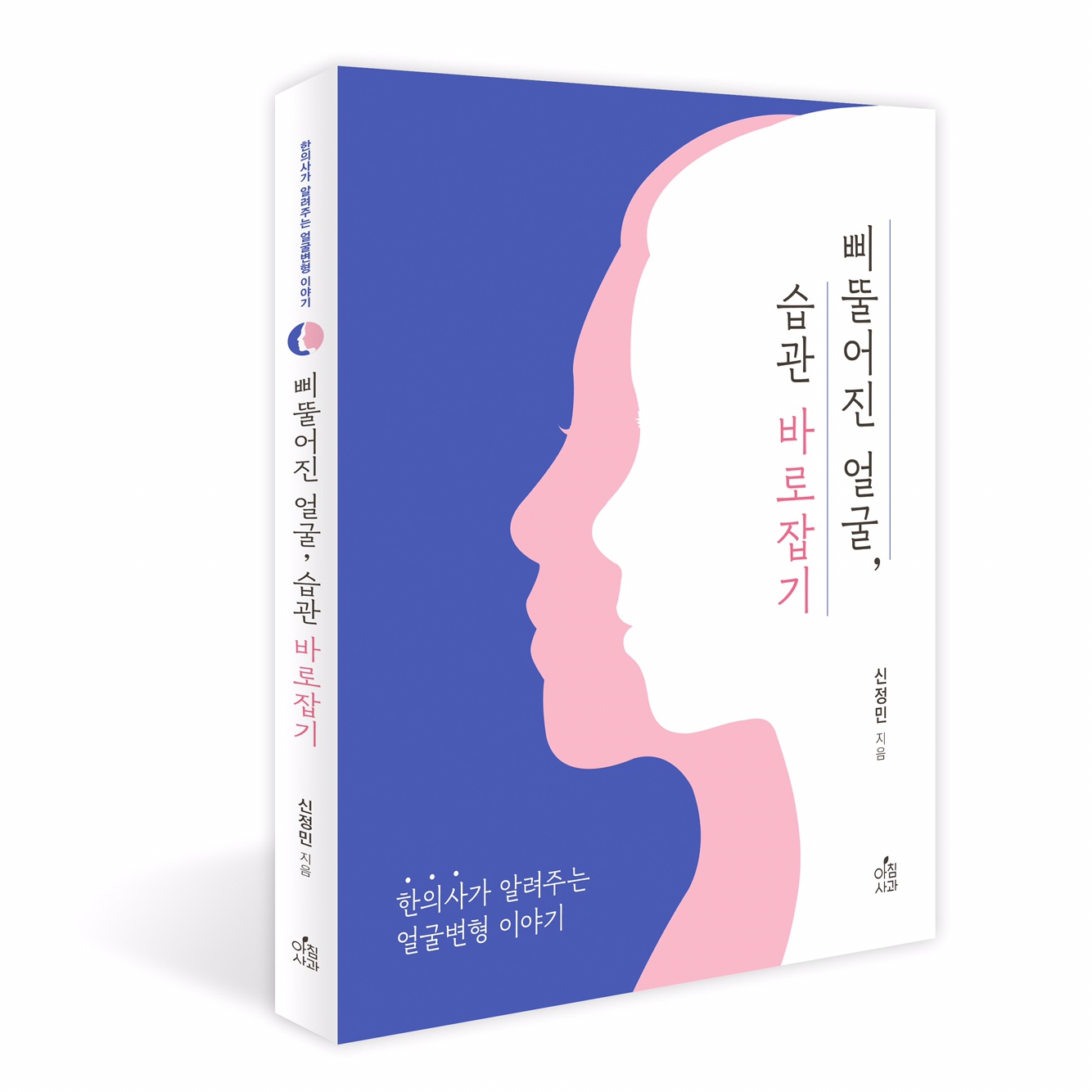
Publication of the book: Correcting Habits for a Crooked Face
2026.01.07
Did you know that the smartphone your child is currently using can cause not only vision deterioration but also facial asymmetry? Recently, the number of growing children visiting the clinic due to sudden jaw pain has been increasing. Compared to adults who have finished growing, smartphones are particularly detrimental to children in the growth stage where physical changes are significant. This is because the postures repeatedly adopted when looking at a smartphone and the characteristic walking patterns that appear when walking while looking at a smartphone lead to physical imbalance and facial asymmetry. Is your face in photos even slightly crooked? If so, is your jaw okay? When meeting people who are concerned about temporomandibular joint disorders or facial asymmetry, they often complain of other physical symptoms in addition to appearance-related complexes. A temporomandibular joint disorder may not just be a problem with the jaw. It could be the cause of abnormalities in our health. Even at this moment as you chew, swallow, and speak, are you inadvertently ignoring the abnormal signals sent by your jaw joint? Facial asymmetry correction is not just a treatment to become aesthetically beautiful, but a process of regaining health. 29 facial correction exercise methods you can do at home without surgery! Put down the smartphone in your hand for a moment and start now for your child or for yourself. Facial asymmetry correction begins with correcting your small, everyday habits.
Did you know that the smartphone your child is currently using can cause not only vision deterioration but also facial asymmetry? Recently, the number of growing children visiting the clinic due to sudden jaw pain has been increasing. Compared to adults who have finished growing, smartphones are particularly detrimental to children in the growth stage where physical changes are significant. This is because the postures repeatedly adopted when looking at a smartphone and the characteristic walking patterns that appear when walking while looking at a smartphone lead to physical imbalance and facial asymmetry. Is your face in photos even slightly crooked? If so, is your jaw okay? When meeting people who are concerned about temporomandibular joint disorders or facial asymmetry, they often complain of other physical symptoms in addition to appearance-related complexes. A temporomandibular joint disorder may not just be a problem with the jaw. It could be the cause of abnormalities in our health. Even at this moment as you chew, swallow, and speak, are you inadvertently ignoring the abnormal signals sent by your jaw joint? Facial asymmetry correction is not just a treatment to become aesthetically beautiful, but a process of regaining health. 29 facial correction exercise methods you can do at home without surgery! Put down the smartphone in your hand for a moment and start now for your child or for yourself. Facial asymmetry correction begins with correcting your small, everyday habits.

Publication of a paper on facial asymmetry correction improved through Korean medical treatment
2026.01.07
This study is a case report analyzing five cases where facial asymmetry improved through non-surgical Korean medicine treatment, rather than invasive treatments such as surgery or orthodontics. Treatment was performed for 10 to 14 sessions using a combination of acupuncture, Chuna therapy, Functional Cerebrospinal Therapy (FCST), craniosacral therapy, and intraoral appliances. To compare before and after treatment, changes in soft and hard tissues were quantitatively evaluated through facial photograph analysis and radiographic imaging of the head and the entire body. As a result, the deviation of the facial midline, the tilt of the eyes and corners of the mouth, and the asymmetry of the mandible and skull significantly decreased on average, and accompanying symptoms such as temporomandibular joint pain, headaches, and shoulder/neck pain also improved. This study suggests that non-surgical Korean medicine treatment can be an effective treatment alternative for muscular, soft-tissue, and functional facial asymmetry, along with improving overall body balance.
This study is a case report analyzing five cases where facial asymmetry improved through non-surgical Korean medicine treatment, rather than invasive treatments such as surgery or orthodontics. Treatment was performed for 10 to 14 sessions using a combination of acupuncture, Chuna therapy, Functional Cerebrospinal Therapy (FCST), craniosacral therapy, and intraoral appliances. To compare before and after treatment, changes in soft and hard tissues were quantitatively evaluated through facial photograph analysis and radiographic imaging of the head and the entire body. As a result, the deviation of the facial midline, the tilt of the eyes and corners of the mouth, and the asymmetry of the mandible and skull significantly decreased on average, and accompanying symptoms such as temporomandibular joint pain, headaches, and shoulder/neck pain also improved. This study suggests that non-surgical Korean medicine treatment can be an effective treatment alternative for muscular, soft-tissue, and functional facial asymmetry, along with improving overall body balance.

Publication of a paper on facial wrinkle improvement using volume thread-embedding acupuncture
2026.01.07
This study is a series of three case reports evaluating the effects of thread embedding acupuncture, including volume thread embedding acupuncture (which has seen increasing clinical use recently), on the improvement of facial wrinkles. For three patients who visited with a chief complaint of facial wrinkle improvement, a single treatment session was performed combining general thread embedding acupuncture, cog thread embedding acupuncture, and volume thread embedding acupuncture. Facial photographs taken before and after the procedure were standardized and corrected using Photoshop, and the length of wrinkles was quantitatively measured. The evaluation items included infraorbital wrinkles, cheek laxity wrinkles, nasolabial folds, and marionette lines. As a result, the wrinkle length decreased in all cases, and the reduction rate was particularly prominent in nasolabial folds and marionette lines. Patient satisfaction was generally high, and no serious side effects were observed, other than temporary pain or a foreign body sensation after the procedure. This study suggests that thread embedding acupuncture combined with volume thread embedding acupuncture may be effective in improving deep linear wrinkles, particularly nasolabial folds, and indicates the need for standardized treatment methods and long-term, large-scale clinical research in the future.
This study is a series of three case reports evaluating the effects of thread embedding acupuncture, including volume thread embedding acupuncture (which has seen increasing clinical use recently), on the improvement of facial wrinkles. For three patients who visited with a chief complaint of facial wrinkle improvement, a single treatment session was performed combining general thread embedding acupuncture, cog thread embedding acupuncture, and volume thread embedding acupuncture. Facial photographs taken before and after the procedure were standardized and corrected using Photoshop, and the length of wrinkles was quantitatively measured. The evaluation items included infraorbital wrinkles, cheek laxity wrinkles, nasolabial folds, and marionette lines. As a result, the wrinkle length decreased in all cases, and the reduction rate was particularly prominent in nasolabial folds and marionette lines. Patient satisfaction was generally high, and no serious side effects were observed, other than temporary pain or a foreign body sensation after the procedure. This study suggests that thread embedding acupuncture combined with volume thread embedding acupuncture may be effective in improving deep linear wrinkles, particularly nasolabial folds, and indicates the need for standardized treatment methods and long-term, large-scale clinical research in the future.
